Planning Your Garlic and Onion Beds: What to Plant Before the Frost
As the garden slows and the leaves begin to fall, it might feel like time to hang up your gloves—but not quite yet. There’s one more beautiful act in the gardening year: planting your garlic and overwintering onions.
These hardy crops love the chill. In fact, planting them before the frost helps them establish roots so they can sleep under a blanket of mulch all winter—and wake up strong in early spring.
If you’re in Zone 6b like I am, late October through early November is prime time to tuck these alliums into the soil. Here’s how I plan, prep, and plant garlic and onions to make next year’s harvest the best one yet.
🧄 Why Fall is the Right Time for Garlic & Onions
Garlic and overwintering onions are cool-weather champions. Fall planting allows:
- Strong root development before the ground freezes
- Early spring growth when the soil warms
- Bigger, more flavorful bulbs come summer
It’s a “set it and forget it” kind of planting that rewards you with one of the earliest harvests next year—usually June for garlic, and late spring to midsummer for onions.
📍 Step 1: Choose the Right Varieties
Not all garlic and onions are created equal, especially when you’re planting for overwintering.
Garlic: Hardneck vs. Softneck
- Hardneck garlic (like ‘Music’ or ‘German Extra Hardy’) is ideal for northern climates like Zone 6b. It’s more cold-hardy and has richer flavor. Bonus: You get delicious garlic scapes in spring!
- Softneck garlic is better for warmer zones but can work with heavy mulching.
💡 I always save the biggest cloves from this year’s harvest for planting—it’s the gardener’s version of saving seed.
Onions: Choose Overwintering Types
Look for intermediate-day or long-day onions for fall planting in Zone 6b. Some great overwintering varieties include:
- ‘Walla Walla’ (sweet and reliable)
- ‘Yellow of Parma’
- ‘Red Wing’ for storage
You’ll want to plant from sets or transplants, not seeds, in fall.
🌱 Step 2: Prep the Bed for Cold-Weather Success
Garlic and onions are heavy feeders and need loose, fertile soil to form big bulbs.
Bed Prep Tips:
- Choose a sunny, well-draining location
- Loosen the soil 8–10 inches deep
- Mix in aged compost or well-rotted manure
- Add a balanced organic fertilizer (like a 5-5-5) to boost nutrients
I avoid planting in the same bed as last year’s alliums to prevent disease—rotate every 2–3 seasons.
🧄 Step 3: Planting Garlic the Right Way
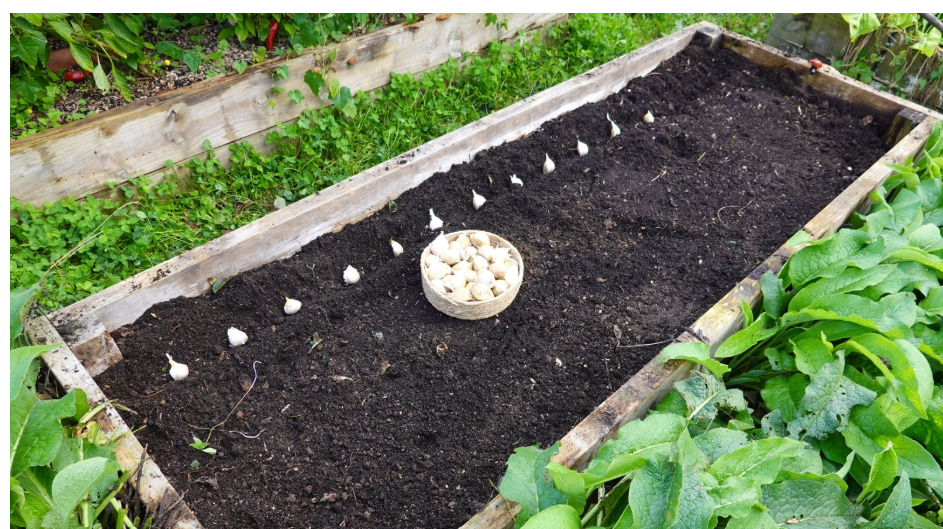
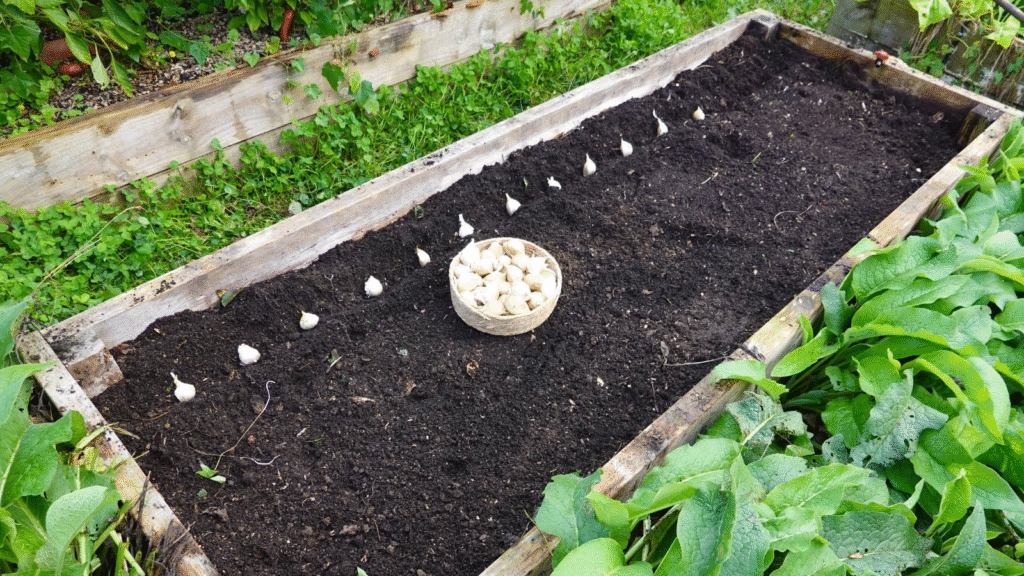
- Break apart garlic heads into individual cloves (don’t peel them)
- Plant pointy side up, 2 inches deep
- Space cloves about 6 inches apart, rows 8–12 inches apart
- Water well after planting
Cover with 3–4 inches of mulch (straw, shredded leaves, or pine needles work well). This insulates the soil and keeps the garlic cozy through freeze and thaw cycles.
🧅 Step 4: Planting Overwintering Onions
- Plant sets or transplants 1–2 inches deep with the neck just at soil level
- Space 4–6 inches apart in rows 12 inches apart
- Water them in and mulch lightly
If we get a mild winter, they’ll start bulbing up early next spring. If it’s a harsher winter, the mulch will protect them until it’s safe to grow again.
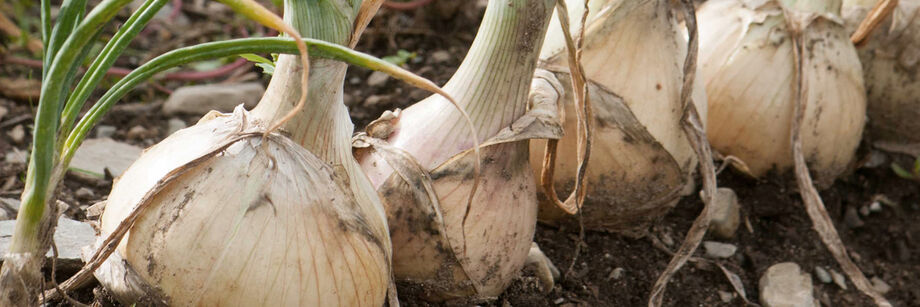
Image 2: Onion sets lined up neatly.
🍂 Step 5: Mulching and Marking
Mulch is your best friend for overwintering crops in Zone 6b. I aim for:
- 3–4 inches of straw or shredded leaves after planting
- Topping up the mulch in mid-winter if it compacts or blows away
- Pulling some of it back in spring as the soil warms to encourage growth
Label your rows clearly—I’ve mistaken onion shoots for weeds before! I use wooden garden markers or painted rocks to keep things cute and clear.
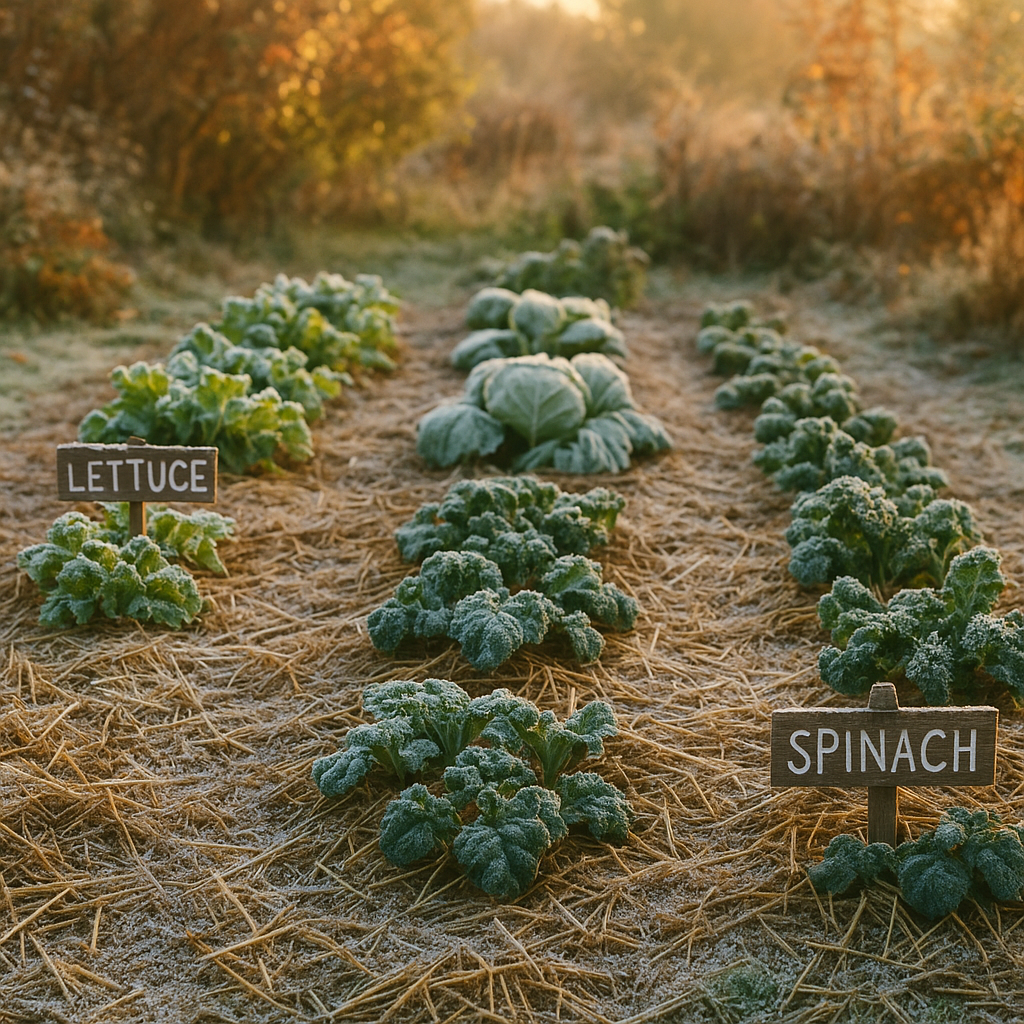
Image 3: A cozy fall garden bed covered in straw mulch, with labeled rows and a dusting of early frost.
✅ Bonus Tips for Success
- Watch the weather: Try to plant garlic 2–3 weeks before your first hard frost
- Water once after planting, then let the fall rains take over
- Don’t fertilize again until spring—a spring feeding will support bulbing
- Weed early in spring—garlic and onions don’t like competition
Final Thoughts from My Autumn Garden
Planting garlic and onions in the fall is like tucking little promises into the earth. You won’t see much action through winter, but come spring, those green shoots will be some of the first signs that the garden is waking up.
It’s also a reminder: even in the quiet season, something is still growing. Something good is on the way.
So sharpen your clippers, fluff your mulch pile, and take a moment to plan one last planting before the frost sets in. Future you—and your future meals—will be so glad you did.
Here’s to bold bulbs and beautiful beds. 🧄🧅
—Susan