
How to Use Chicken Manure in the Garden (Safely!)
If you’ve got chickens and a garden, you’re sitting on black gold—literally.
Chicken manure is one of the richest natural fertilizers you can use, full of nitrogen, phosphorus, and potassium—all the good stuff your soil needs to thrive. But here’s the catch: fresh chicken manure is hot—way too strong to use directly on plants. If applied too soon, it can burn roots and even spread pathogens.
So what’s a homesteader to do? Compost it smart, age it well, and use it at the right time. Here’s how I do it on my homestead, and how you can turn that messy coop into a source of powerful, garden-boosting nutrients—safely.
🐓 Why Chicken Manure Is Worth the Effort
Compared to other barnyard manures, chicken manure is especially high in nitrogen, making it ideal for leafy green growth. It’s also full of:
- Phosphorus—helps roots, flowers, and fruits
- Potassium – improves overall plant health and disease resistance
- Calcium—essential for strong cell walls (and preventing blossom-end rot)
But because of that richness, it needs time to mellow out before it can safely feed your plants.
🧺 Step 1: Collecting + Storing Chicken Manure
Every time I clean the coop, I scrape out manure along with bedding—usually pine shavings or straw. I keep it all in a designated compost pile or bin near the garden.
What to include:
✔ Manure
✔ Bedding (shavings, straw, leaves)
✔ Crushed eggshells
✔ Droppings from under roosts
✔ Kitchen scraps (optional)
What to avoid:
✘ Fresh manure directly on growing vegetables
✘ Too much wood-only bedding (can slow composting)
✘ Chicken manure from medicated feed (if applicable)
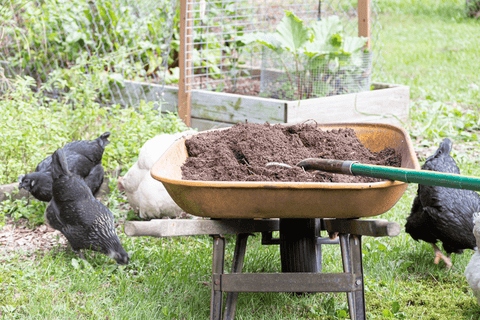
Image 1: A wheelbarrow full of coop bedding and chicken manure.
🌿 Step 2: Composting It the Right Way
To make your chicken manure garden-safe, composting is key. Here’s how to get it right:
The Compost Pile Formula:
- 1 part green (manure, fresh grass, veggie scraps)
- 2 parts brown (bedding, leaves, cardboard)
Mix regularly to keep it aerated and allow it to heat up. A properly managed pile will reach 130–150°F—hot enough to kill weed seeds and most pathogens.
Tips for success:
- Turn the pile every 1–2 weeks
- Keep it slightly moist—like a wrung-out sponge
- Cover with a tarp if rain is in the forecast
Let it break down for 6 to 12 months. When it’s finished, it should look and smell like rich, earthy compost—not like a barnyard.
🍂 Step 3: Use It as a Fall Soil Amendment
Fall is the perfect time to apply aged chicken manure to your garden beds. Here’s why:
- The soil still has warmth, helping microbes work the compost in
- It has all winter to mellow, enrich, and integrate
- Come spring, your beds will be nutrient-rich and ready to grow
How to Apply:
- Spread 1–2 inches of aged composted manure over your beds
- Lightly rake it in or top with mulch
- Let it sit until spring—no need to till
I also use it when building new garden beds or refreshing tired soil. If you practice no-dig gardening like I do in some areas, just layer it in and let nature do the work.
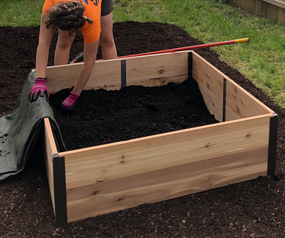
Image 2: A raised garden bed with a thick layer of composted chicken manure spread evenly across the top.
🥕 When Not to Use Chicken Manure
Even composted manure needs to be applied wisely. Here’s what I don’t do:
- I don’t apply it directly to growing root vegetables (especially carrots or beets) during the season—they’re sensitive to high nitrogen.
- I don’t side-dress seedlings with it—stick to mature plants or pre-season prep.
- I don’t use it fresh in the spring garden unless it’s had a full 6–12 months to age.
🧡 Final Thoughts from the Coop and Garden
Using chicken manure in the garden is one of the most rewarding closed-loop systems on the homestead. The hens give us eggs, their waste fuels the soil, and that soil gives us more food—it’s a beautiful cycle.
Yes, it takes a little planning and patience, but the payoff is worth it: stronger plants, richer soil, and less reliance on store-bought fertilizer.
So the next time you’re mucking out the coop, don’t think of it as a chore—think of it as prepping next season’s harvest.
Here’s to turning chicken chores into garden gold. 🐓🌱
—Susan