Starting Seeds in January: How to Get Ahead on Your Spring Garden Plans
I know—it’s still cold, the ground might be frozen, and the garden feels like a distant dream. But come January, I start to feel it—that quiet excitement that whispers, “It’s time to begin again.”
There’s something special about the start of a new gardening year. A fresh planner, seed catalogs stacked on the kitchen table, and the promise of a new season filled with possibility. While others are packing up holiday decorations, I’m sorting seed packets and mapping out garden beds.
If you’ve never started seeds this early, don’t worry—it’s not about doing everything all at once. January is the perfect time to ease into the rhythm of spring by getting organized, sourcing your seeds, and starting a few early growers indoors.
Here’s how I begin each garden year—seed by seed, tray by tray, page by page.
1. Why January Is the Perfect Time to Plan (and Plant!)
January might seem early, but if you’re dreaming of a flourishing garden come April and May, now’s the time to start.
Getting a head start means:
- Stronger seedlings when it’s time to transplant
- More variety because you’re not limited to nursery stock
- A longer harvest window for early crops
- And best of all? A little green hope during the greyest time of year
Even just one tray of seedlings on a sunny windowsill can lift the whole house.
2. Meet Your New Best Friend: The Garden Planner
Every January, I pull out my garden planner—it’s dog-eared, scribbled in, and honestly, one of the most helpful tools I have.
In it, I track:
- What I grew last year (and what worked… and didn’t)
- My frost dates and planting calendar
- Succession planting plans
- Weekly to-dos, seed inventory, and seedling progress
Having a planner keeps me focused and prevents that “Oops, I forgot to start the tomatoes” moment in mid-March. If you’re just starting out, a simple notebook works too—but I’ll be sharing a printable version of my custom planner soon for those who want a little structure to their spring dreaming.
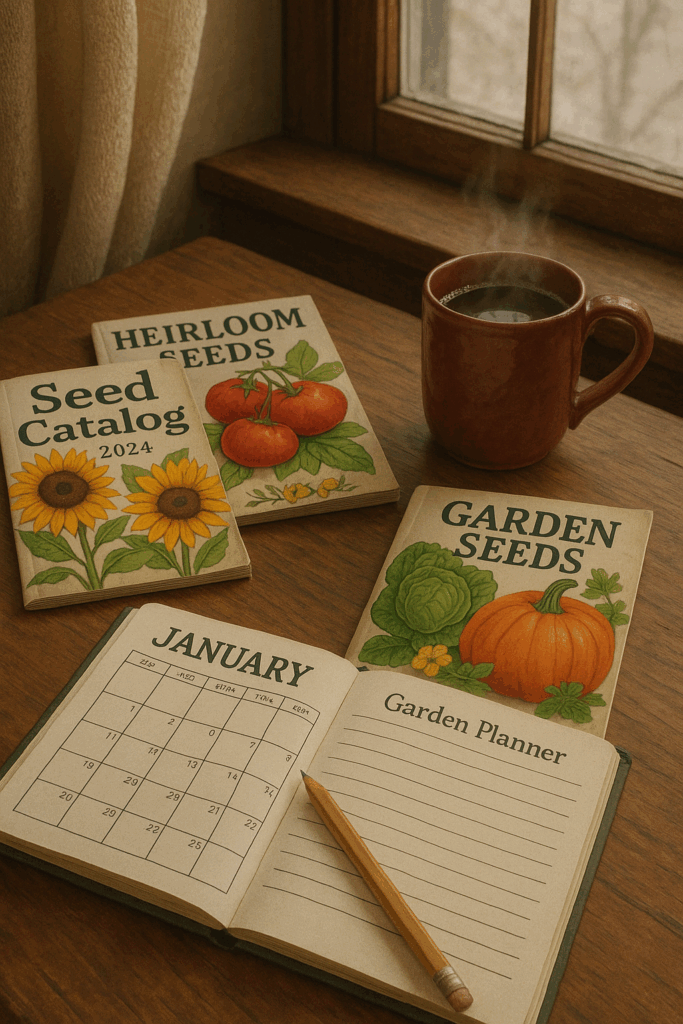
Image 1: A cozy January scene with seed catalogs, a steaming mug, and a garden planner open on the table.
3. Sourcing Seeds: How to Choose and Where to Buy
January is prime seed-shopping time—especially for rare or heirloom varieties. The best ones go fast, so I try to order early.
A few of my favorite seed sources:
- Baker Creek Heirloom Seeds – Beautiful, unusual varieties
- High Mowing Organic Seeds – 100% organic and reliable
- Seed Savers Exchange – Great for preserving heritage crops
- Hudson Valley Seed Co. – Gorgeous packaging and thoughtful sourcing
Tips for choosing:
- Look for open-pollinated or heirloom seeds if you want to save your own later
- Choose varieties suited to your zone and season length
- Be honest about your garden space—don’t order 10 types of pumpkins if you have two beds 😉
4. What to Start in January
Not everything needs a January head start, but a few crops benefit from extra time under lights or on a sunny windowsill.
Here’s what I start this month:
- Onions (especially storage types—start from seed for stronger plants)
- Leeks
- Celery and celeriac
- Slow-growing herbs like parsley and thyme
- Artichokes (if you’re in a warmer zone)
- Peppers (start mid-to-late January for long germination times)
I also make sure all my seed-starting supplies are cleaned, stocked, and ready: trays, seed-starting mix, labels, and a heat mat or two.
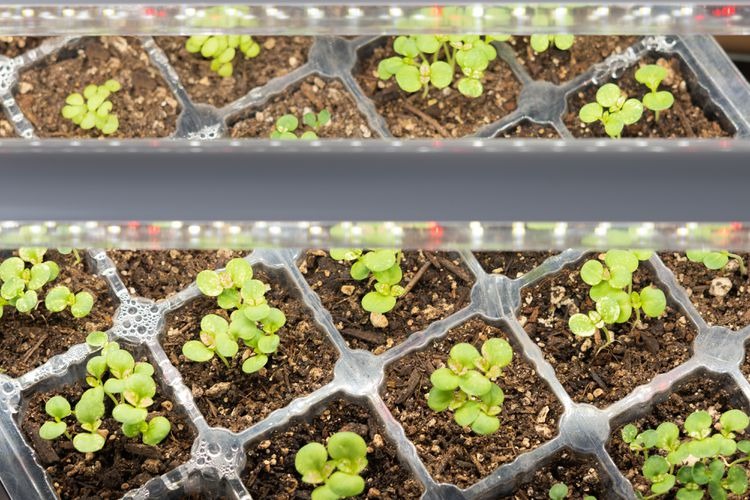
Image 2: A seed tray under grow lights.
5. Indoor Seed-Starting Tips for Success
If you’re new to starting seeds indoors, here are a few lessons I’ve learned (sometimes the hard way):
- Use a sterile seed-starting mix – regular soil is too dense
- Label everything – trust me, baby peppers and tomatoes all look the same
- Give them light – a sunny window can work, but grow lights give better, more even growth
- Watch your watering – keep the soil moist but not soggy; bottom watering is your friend
- Stay warm – most seeds germinate best at 65–75°F (a heat mat really helps!)
A little extra care in the beginning leads to healthier, happier seedlings come spring.
6. Let the Garden Dreams Begin
One of the most nourishing things about January gardening is that it’s as much about intention as it is about action. You might only have a few trays going—but you’re planting more than seeds. You’re planting possibility.
Each little sprout is a reminder: spring is coming. Food will grow. Flowers will bloom. And you’ll be there with dirt on your hands, ready to welcome it.
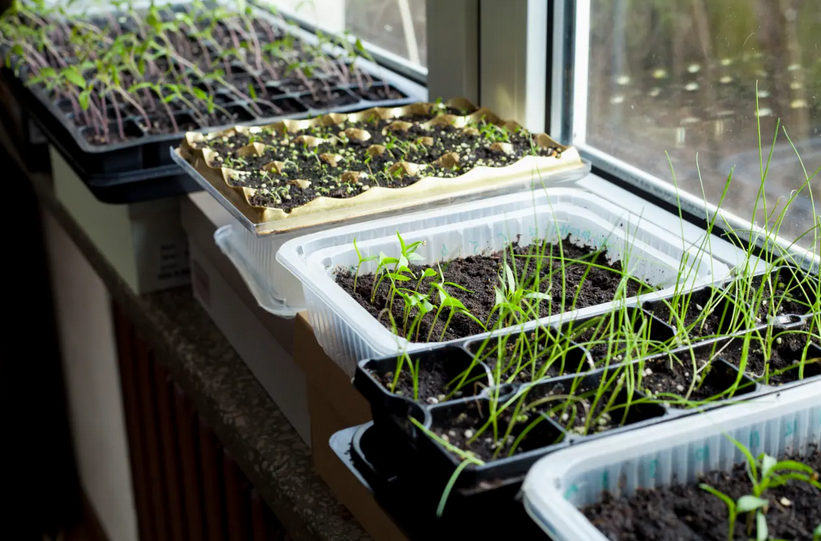
Image 3: A close-up of tiny herb seedlings just sprouting in window-facing trays.
Final Thoughts from My Garden Table
January isn’t just about staying ahead—it’s about connecting with the growing season early. It’s about slowing down enough to plan with purpose, to choose seeds that excite you, and to lay the groundwork for a garden that reflects your hopes for the year.
So dust off your planner, flip through those seed catalogs, and start small if you need to. Even one tray of herbs can be the start of something beautiful.
Spring starts now. 🌱
—Susan