Fieldstone’s Year in the Garden: Lessons Learned + What I’m Planning for Next Year
As the last of the leaves drift across the chicken run and the garden beds settle into their winter slumber, I find myself doing what so many gardeners do this time of year—reflecting. There’s something deeply grounding about taking a quiet moment to look back at the past season: what thrived, what failed, and what I want to try again with fresh hope.
This was a big year for Fieldstone. We added new beds to the front food forest, experimented with a few offbeat varieties, and even made room for a second round of succession planting that surprised me in the best way. Of course, not everything went perfectly (it never does), but every flop came with a lesson—and every unexpected success was a little gift.
So here’s a peek into Fieldstone’s year in the garden—the highs, the lows, and what I’m already dreaming up for next spring.
🌟 Garden Highlights: The Wins Worth Celebrating
1. The Raised Bed Expansion Was 100% Worth It
Back in early spring, I built out two new cedar beds along the south side of the house. The sun hits that spot beautifully, and it ended up being perfect for heat-loving crops. My peppers loved the extra warmth, and I had more jalapeños, banana peppers, and sweet lunchbox varieties than ever before.
I also noticed fewer pest issues in these beds—possibly thanks to better airflow and the companion planting I snuck in (marigolds and basil worked like a charm).
2. Pole Beans on the Trellis Tunnel = Magic
This year, I bent cattle panels over two raised beds to form an arched trellis and planted scarlet runner beans on either side. Not only did it look like a page out of a fairytale, but the bees loved the flowers, and harvesting was a breeze. Next year, I’m adding morning glories to the mix for a splash of early color.
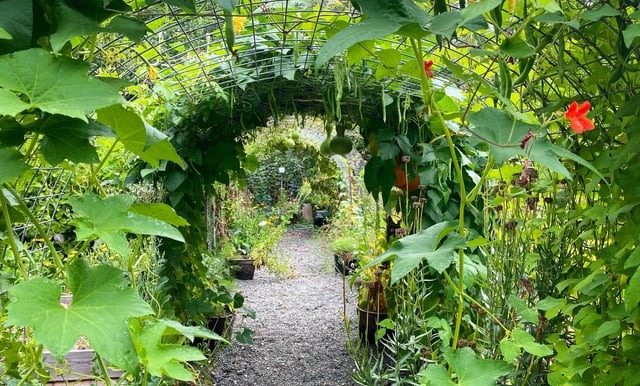
Image 1: A green trellis tunnel of flowering plants.
3. Calendula Took Over—in the Best Way
I let a few calendula plants go to seed last year, and wow—this season they came back like a cheerful golden wave. I harvested petals for salves and teas, but mostly just enjoyed how much joy they brought to the garden (and the pollinators). Definitely letting them reseed again.
🌱 The Flops (and What They Taught Me)
1. The Cucumbers Got Mildewy—Fast
Despite a strong start, my cucumber plants were hit hard by powdery mildew during a rainy stretch in July. I tried a few organic sprays, but by mid-August, they were barely hanging on.
Lesson: I need to give them better airflow next year—either by spacing them wider or choosing a variety more resistant to mildew. And I’ll prune the lower leaves earlier in the season to improve circulation.
2. My Fall Carrots Didn’t Bulk Up
I sowed a second round of carrots in early August, thinking I’d get a nice fall harvest. The tops looked great… but the roots stayed spindly and underwhelming.
Lesson: I think I planted too late for my zone (and the soil was a little compacted). Next year, I’ll sow earlier—late July—and make sure to loosen the soil more deeply before planting.
3. Lettuce Bolted in Record Time
A sudden heatwave in May sent all of my beautiful lettuce into panic mode. Within days, they were tall, bitter, and unusable.
Lesson: I need to stagger my plantings better and invest in some shade cloth for early spring protection. I’m also looking into heat-tolerant varieties like ‘Jericho’ for next year.
🏆 Favorite Varieties This Year
These stood out in my garden—and they’re all coming back:
- Tomato ‘Black Krim’: Rich, smoky flavor and surprisingly productive. Hands-down the tastiest tomato I grew this year.
- Pepper ‘Lemon Dream’: A sweet, yellow snacking pepper that looked like sunshine and tasted even better.
- Bean ‘Provider’: Grew fast, yielded heavily, and handled the heat without flinching.
- Kale ‘Red Russian’: Thrived in both spring and fall with minimal pest damage.
- Flower: Zinnia ‘Benary’s Giant’ – Blooms for days and made gorgeous bouquets.
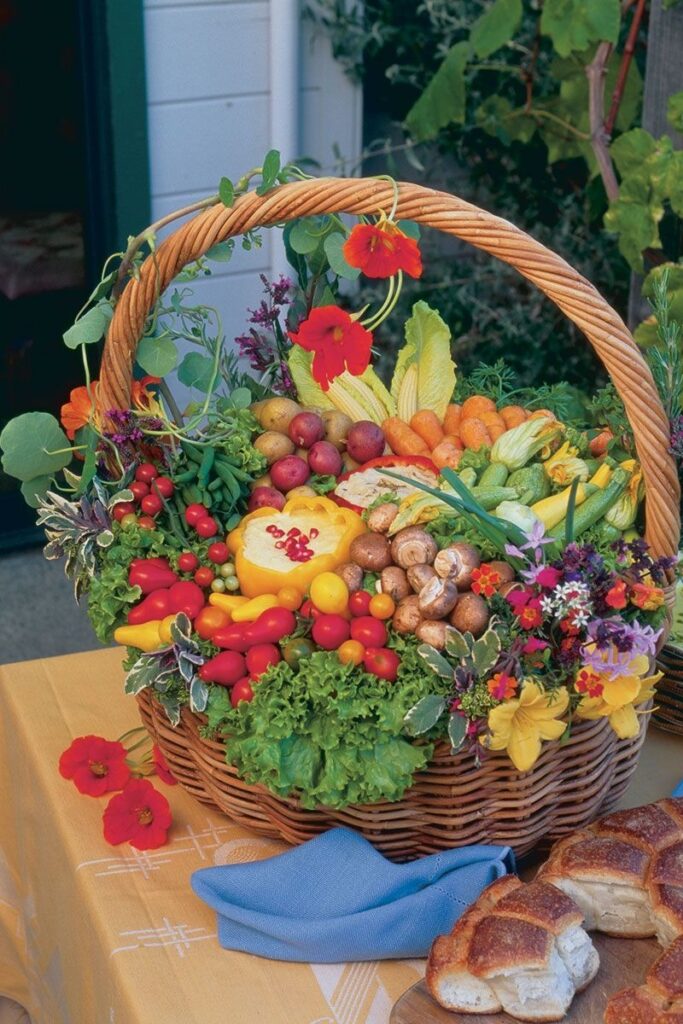
Image 2: A garden basket overflowing with a variety of vegetebles.
🌿 What I’m Planning for Next Year
1. More Succession Planting
This year’s second crop of greens and beets was a late-summer experiment that paid off. I’ll be better prepared next time with transplants and a tighter calendar, so I can harvest right into fall without gaps.
2. Cold Frames and Low Tunnels
I’m finally ready to extend my season with a few cold frames. My goal is to grow greens into early winter and start hardening off seedlings earlier in the spring.
3. Native Flowers + Herbs for the Pollinators
I want to plant more native varieties like echinacea, milkweed, and mountain mint—alongside herbs like dill and borage. They bring in the beneficial bugs and make the garden feel wild and alive.
4. Compost Overhaul
My compost setup worked… okay. But it could be better. I’m planning a three-bin system that’s easier to turn and manage. Compost is gold out here, and I want more of it.
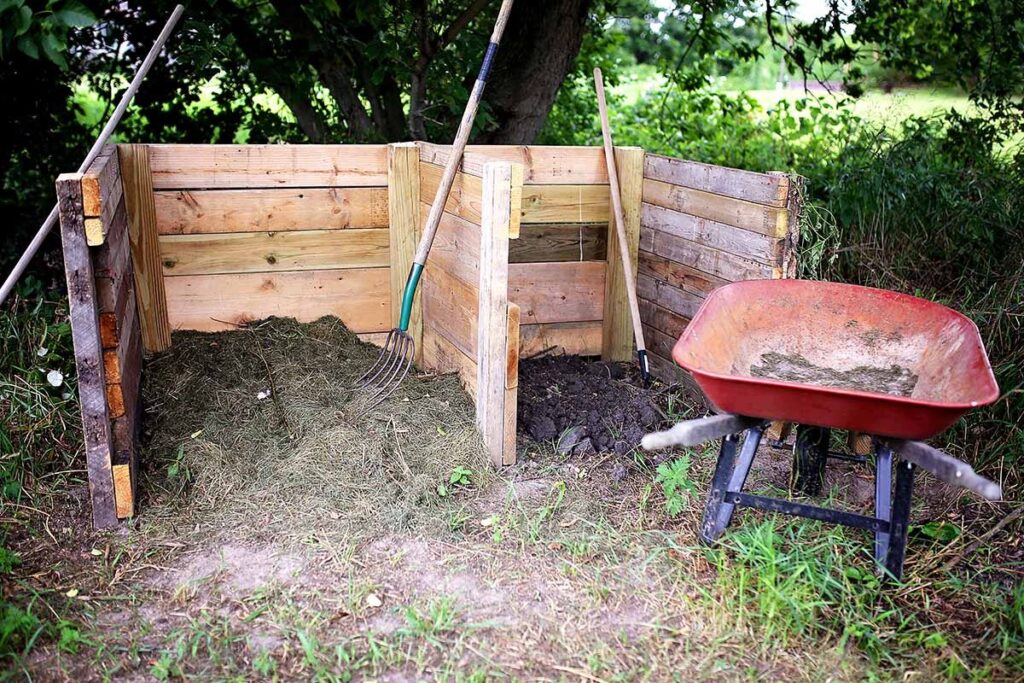
Image 3: A compost station with wooden bins beside a wheelbarrow and garden tools.
Final Reflections from the Garden Gate
This season, like every season, was a mix of delight and dirt-under-the-nails learning. But as I sit here with my mug of tea, flipping through notes in my garden journal, I’m filled with gratitude—for every sprouted seed, every bloom, every squash I pulled from the vine with a smile.
Next year’s garden will be shaped by what this one taught me. And that’s the real beauty of gardening—it’s never just about the plants. It’s about growing yourself, too.
Until next season—happy planning, dreaming, and digging. 🌿
—Susan